

CAVE@NUS Signals a New Phase in Immersive Healthcare Education with Technology Supported by FXMedia
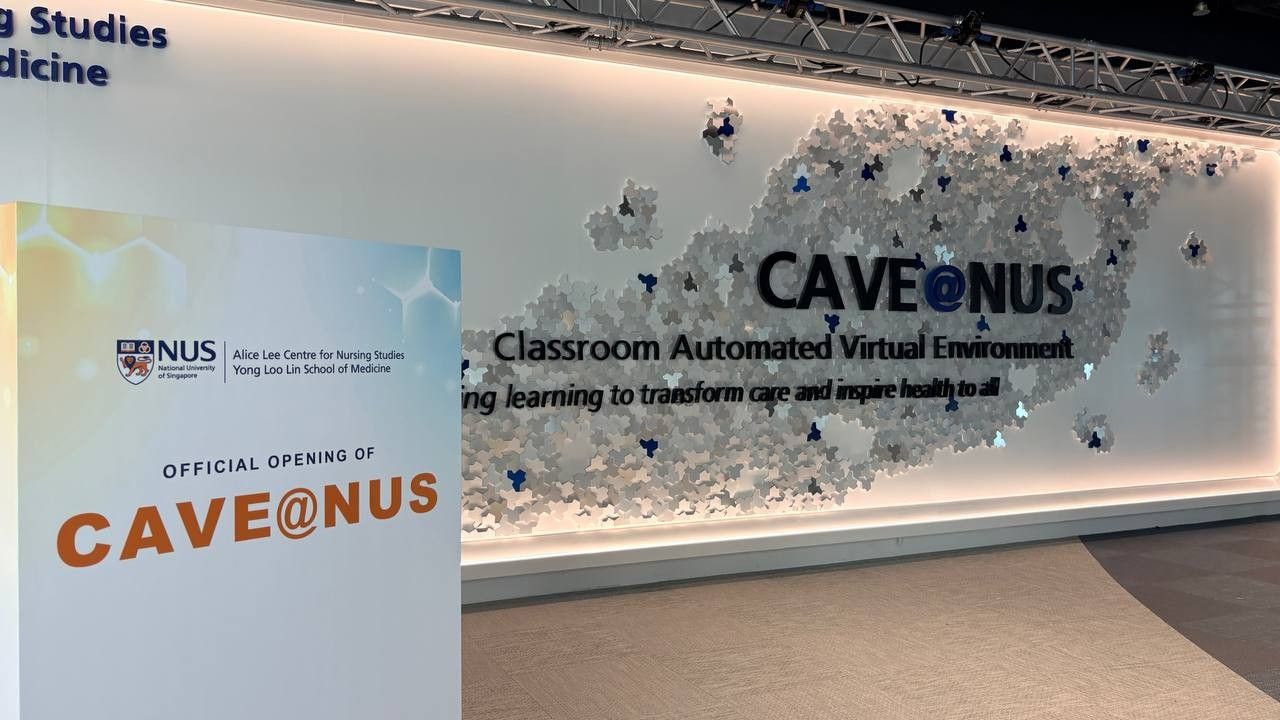
The Opening of Classroom Automated Virtual Environment (CAVE@NUS)
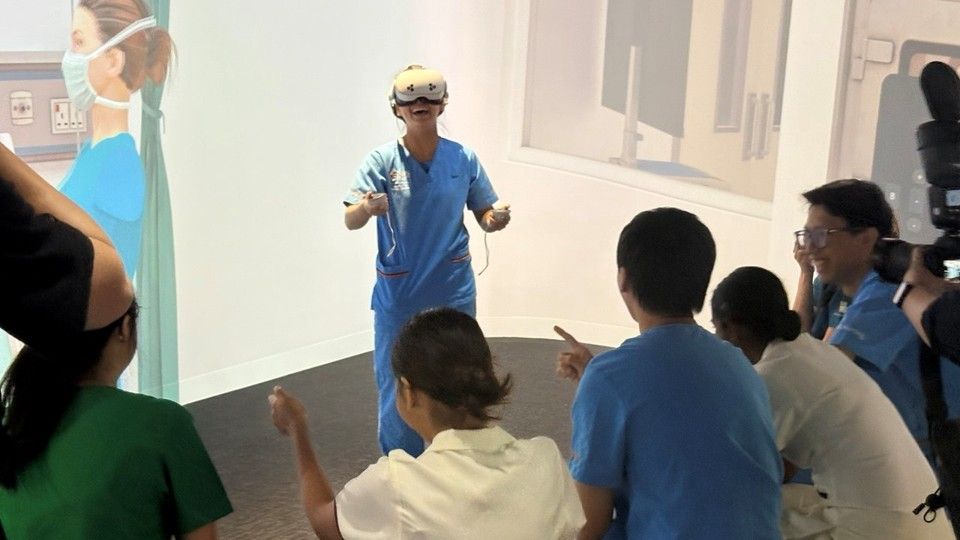
As part of the Virtual Escape Room Simulation-based Education (VERSE) initiative, nursing students from NUS and ITE work together to navigate realistic patient-care scenarios.
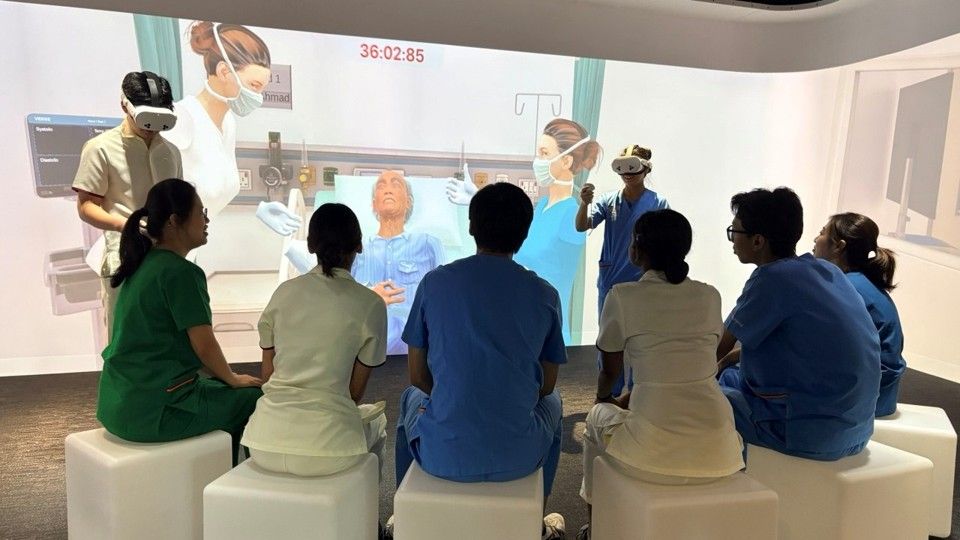
VERSE combines preparatory learning, virtual simulation and faculty-led debriefing to help students strengthen their clinical decision-making, communication and teamwork skills.
FXMedia and NUS collaboration highlights how immersive simulation and VR integration can strengthen experiential learning and collaborative clinical training.
Around the world, universities are turning to immersive simulation, virtual reality (VR), artificial intelligence (AI) and collaborative digital environments to bridge this gap. Rather than replacing traditional teaching, these technologies enable students to repeatedly practise clinical judgement, communication and teamwork in realistic yet risk-free settings.
Singapore's recently launched Classroom Automated Virtual Environment (CAVE@NUS) represents one example of this evolution. Developed by the National University of Singapore (NUS), CAVE@NUS combines immersive visualisation, simulation-based education and connected learning spaces to create realistic healthcare training environments. Through the Virtual Escape Room Simulation-based Education (VERSE) initiative, nursing students from NUS and the Institute of Technical Education (ITE) work together inside virtual patient-care scenarios that mirror real clinical workflows, strengthening interdisciplinary collaboration before entering actual healthcare settings.
For technology companies supporting digital transformation in education, projects like CAVE@NUS demonstrate how immersive technologies are evolving from experimental innovations into practical learning infrastructure.
FXMedia Internet Pte Ltd contributed to this learning environment through the development of the CAVE environment and its integration with the VR system, enabling immersive healthcare training experiences that support collaborative nursing education. The company’s involvement also included integrating audiovisual hardware and immersive simulation technologies, as well as creating interactive clinical simulations to enhance experiential learning workflows.
- From Technology Demonstrations to Learning Outcomes -
While virtual reality has often been associated with visual experiences alone, today's immersive learning environments are increasingly designed around measurable educational outcomes. Within simulation-based healthcare education, immersive environments allow learners to experience realistic patient scenarios where they must assess situations, communicate with teammates, make clinical decisions, and respond to changing conditions without placing actual patients at risk.
The CAVE@NUS environment supports this approach by allowing educators to facilitate immersive scenarios while observing learner interactions, adapting exercises in real time and conducting structured debrief sessions that reinforce critical thinking and collaborative practice. For students, the value extends beyond technical knowledge. It is an opportunity to build confidence, develop communication skills, and experience the realities of multidisciplinary healthcare teamwork before entering clinical placements.
- Immersive Technology is Becoming Core Educational Infrastructure -
According to Mr. Mark Wong, Director and Co-Founder, FXMedia, immersive technology should no longer be viewed as an emerging trend, but as an increasingly important component of modern education.
"The conversation has shifted from whether immersive technology works to how it can be meaningfully integrated into education. The sophistication of the technology itself no longer measures success, but by whether it helps learners make better decisions, communicate more effectively, and build confidence before entering real-world environments. Projects like CAVE@NUS demonstrate how immersive experiences can support educators in achieving those outcomes."
Healthcare is one of several industries adopting immersive technologies to strengthen workforce readiness, particularly in environments where practical experience, collaboration and rapid decision-making are critical.
- Collaboration at the Centre of Healthcare Education -
Beyond the technology itself, CAVE@NUS also represents a growing emphasis on collaborative learning across different educational pathways. Professor Liaw Sok Ying, Head of NUS Nursing and Principal Investigator of VERSE, explained the importance of this approach:
"What makes VERSE unique is not just the technology, but the relationships it builds. By bringing students from different educational pathways together, we help them understand each other's roles, communicate more effectively, and develop the trust needed to function as a cohesive nursing team. As one of the first initiatives of intra-professional education locally and globally, VERSE represents an important step towards a more integrated approach to nursing education and workforce preparation."
The project demonstrates how immersive simulation can support not only clinical competency, but also the interpersonal and collaborative skills increasingly recognised as essential to delivering quality patient care.
- A Broader Future for Immersive Learning -
The adoption of immersive learning environments is expanding beyond healthcare into sectors including engineering, public safety, manufacturing, aviation and workforce development. As organisations continue investing in digital transformation, immersive technologies are expected to become increasingly integrated with artificial intelligence, digital twins and real-time analytics to create adaptive learning environments tailored to individual learners and evolving operational needs.
For solution providers, the opportunity is no longer simply to create virtual experiences, but to develop platforms that improve learning effectiveness, strengthen collaboration and prepare organisations for the future of work. Projects such as CAVE@NUS provide an early example of how immersive technologies can move beyond innovation showcases to become part of everyday education.
About FXMedia Internet Pte Ltd
FXMedia Internet Pte Ltd is a Singapore-based digital innovation company specialising in Artificial Intelligence, Mixed Reality, Virtual Reality, immersive simulations, interactive learning experiences, and digital transformation solutions. The company works with organisations across education, training, enterprise, and public-sector environments to develop technology solutions that enhance engagement, learning effectiveness, and operational readiness.
Mark Wong (Director)
FXMedia Singapore
+65 9017 2720
email us here
Visit us on social media:
LinkedIn
Legal Disclaimer:
EIN Presswire provides this news content "as is" without warranty of any kind. We do not accept any responsibility or liability for the accuracy, content, images, videos, licenses, completeness, legality, or reliability of the information contained in this article. If you have any complaints or copyright issues related to this article, kindly contact the author above.
